Quick Answer
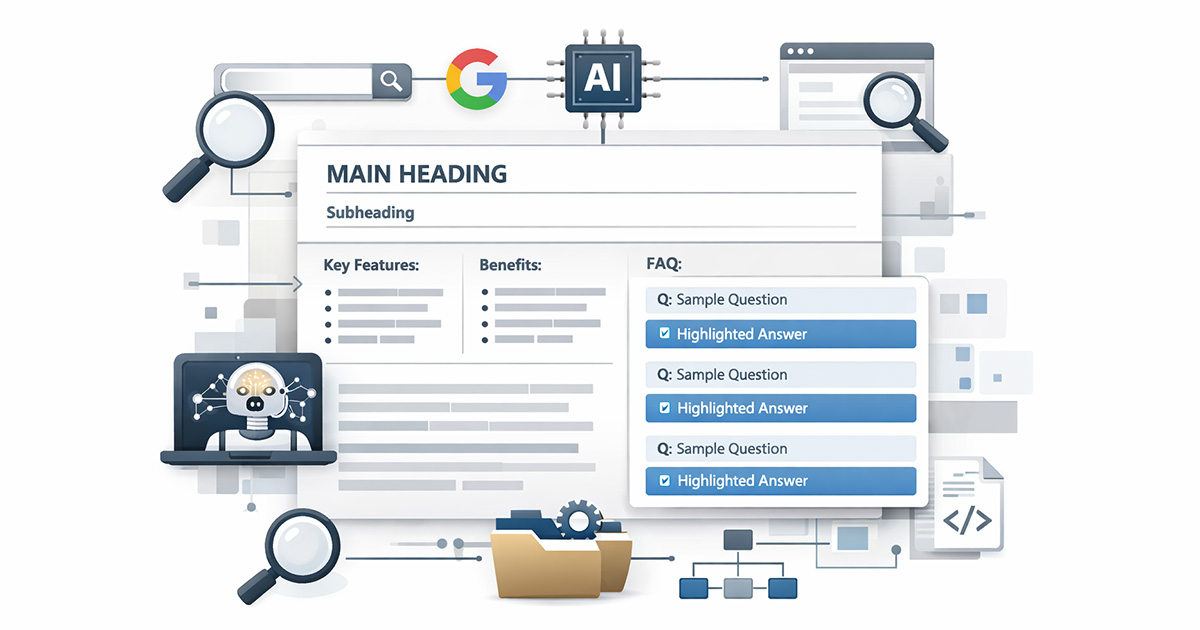
Voice search optimization is the process of structuring website content so digital assistants and AI search engines can easily interpret and deliver answers to spoken user questions. Businesses that optimize their content for voice search improve their visibility in conversational queries, featured snippets, AI-generated summaries, and voice assistant responses.
Voice search has become increasingly common as users rely on smartphones, smart speakers, and AI-powered assistants to find information quickly. Unlike traditional search queries, voice searches are more conversational and often phrased as complete questions.
Businesses that structure their content to answer these conversational queries clearly can significantly improve their visibility across modern search platforms.

Search behavior is evolving rapidly as voice assistants become a common way for people to find information online. Instead of typing keywords into a search engine, users increasingly ask conversational questions through devices like smartphones, smart speakers, and in-car assistants.
This shift toward spoken queries has created new opportunities for businesses to appear in search results through voice search optimization.
Voice search optimization works closely with traditional search engine optimization and modern answer-based search strategies. Businesses that understand how these systems work together can significantly improve their visibility across search platforms.
For a deeper explanation of how answer-focused search works, explore our complete guide to Local SEO and Answer Engine Optimization.
What Is Voice Search Optimization?
Voice search optimization is the process of structuring website content so search engines can easily identify and deliver answers to spoken questions.
Unlike traditional search queries that often use short keyword phrases, voice searches tend to be longer and more conversational.
For example, a traditional search might look like:
- “SEO agency Michigan”
A voice search might sound like:
- “What marketing agency in Michigan helps businesses improve search visibility?”
This conversational style means businesses must structure their content in ways that directly answer common questions.
Voice search optimization works closely with Answer Engine Optimization, which focuses on helping search engines extract useful answers from web pages.
How Voice Search Changes Search Behavior
Voice search changes how users interact with search engines because people naturally speak differently than they type.
Spoken searches tend to include:
- longer phrases
- natural language questions
- location-based queries
- conversational wording
Examples of common voice searches include:
- “What is answer engine optimization?”
- “How does SEO help small businesses?”
- “Which marketing agency near me offers SEO services?”
Because voice searches are question-based, search engines often deliver answers through featured snippets or AI-generated summaries.
Businesses that structure their content clearly are more likely to appear in these results.
The Connection Between Voice Search, SEO, and AEO
Voice search optimization does not replace traditional SEO strategies. Instead, it works alongside them.
Traditional SEO focuses on improving rankings in search results, while AEO focuses on structuring content so search engines can extract direct answers.
Voice search relies heavily on both systems.
To better understand the difference between these strategies, read SEO vs AEO: What Businesses Need to Know.
When businesses combine SEO, AEO, and voice search optimization, they improve their chances of appearing in multiple search experiences, including:
- featured snippets
- AI-generated summaries
- voice assistant responses
- conversational search results
How Search Engines Deliver Voice Search Results
Modern search engines use artificial intelligence and natural language processing to understand spoken queries.
When a user asks a question, the search engine analyzes the request and looks for pages that clearly answer that question.
Several factors influence whether a website is selected as a voice search result.
These include:
- Clear question-and-answer structure
- Short paragraphs explaining key concepts
- Structured data and schema markup
- Strong topical authority
- High-quality content formatting
Understanding how search engines interpret this information is essential for businesses that want to appear in voice search results.
Content Structure for Voice Search Optimization
Content formatting plays an important role in voice search visibility.
Search engines prefer pages that organize information in a way that is easy to interpret and summarize.
Effective voice search content typically includes:
- clear headings that match common search questions
- short paragraphs explaining key ideas
- bullet lists summarizing information
- FAQ sections addressing user questions
This type of structure helps search engines quickly identify answers within a page.
Businesses that use well-structured content are more likely to appear in both voice search responses and featured snippets.
How Local Businesses Benefit from Voice Search
Voice search is especially important for local businesses.
Many voice searches include location-based intent, such as:
- “marketing agency near me”
- “SEO services in Michigan”
- “who helps businesses improve Google rankings?”
Search engines use local search signals such as business listings, reviews, and geographic relevance when delivering results.
Businesses that combine voice search optimization with local SEO strategies improve their visibility for nearby customers.
To see how these strategies work together, review our Local SEO and AEO services.
Common Voice Search Optimization Mistakes
Many businesses attempt voice search optimization but overlook important elements that affect visibility.
Common mistakes include:
- writing content that focuses only on keywords instead of questions
- creating long paragraphs that are difficult for search engines to summarize
- ignoring structured data and schema markup
- failing to build topical authority through related content
Avoiding these mistakes can significantly improve search performance across both traditional search and voice search results.
Frequently Asked Questions
What is voice search optimization?
Voice search optimization is the process of structuring website content so search engines and voice assistants can deliver direct answers to spoken questions.
How does voice search affect SEO?
Voice search encourages businesses to create conversational, question-based content that helps search engines understand and deliver answers more effectively.
Is voice search the same as Answer Engine Optimization?
Voice search optimization focuses on spoken queries, while AEO focuses on structuring content so search engines can extract answers for search results.
Why is voice search important for businesses?
Voice search is growing rapidly as more users rely on smartphones, smart speakers, and AI assistants to find information.
Conclusion
Voice search is transforming how users interact with search engines. As artificial intelligence and conversational search continue to evolve, businesses must adapt their content strategies to meet these new expectations.
By combining traditional SEO, Answer Engine Optimization, and voice search optimization, organizations can increase their visibility across multiple search platforms and reach users wherever they are searching.
Businesses that structure their content clearly and provide useful answers will be best positioned to succeed in modern search environments.
To learn how these strategies work together, explore our complete guide to Local SEO and Answer Engine Optimization.
About PG38 Creative
Marketing Strategies Built for Growth
PG38 Creative helps businesses grow through strategic marketing, creative content, and advanced search visibility. Our team specializes in website design, video marketing, paid advertising, and modern search strategies like SEO and Answer Engine Optimization (AEO).
We help companies build systems that attract customers, generate leads, and create long-term brand visibility.