Quick Answer
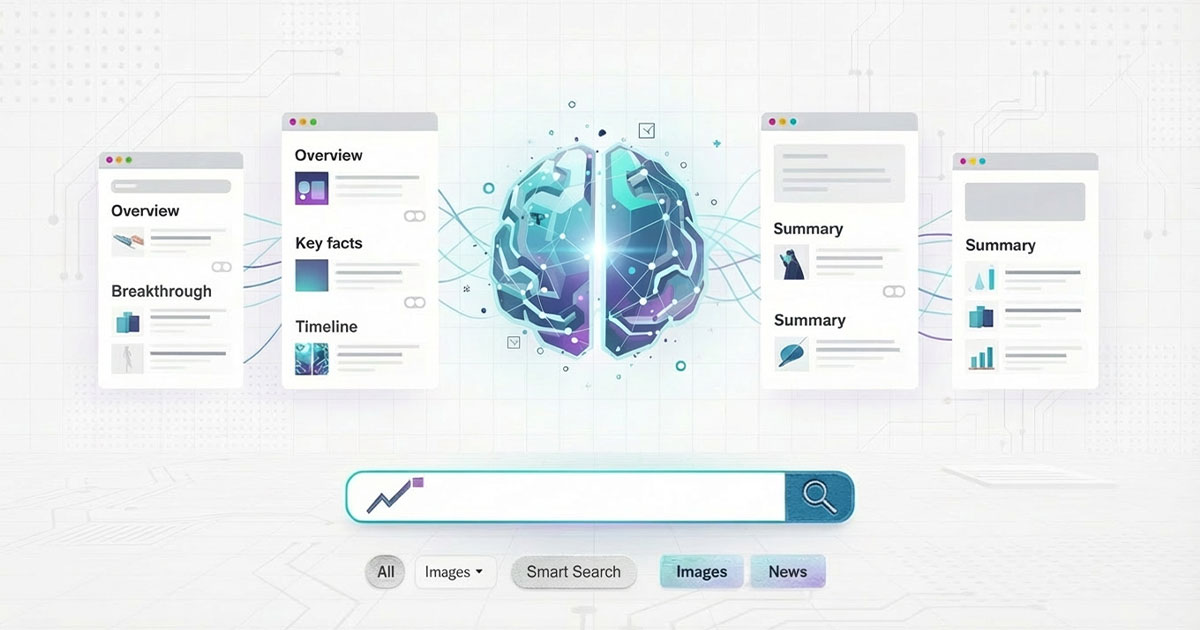
AI search engines use artificial intelligence and natural language processing to interpret search queries and deliver direct answers instead of simply listing websites. Businesses that structure their content with clear explanations, organized sections, and question-based formatting increase their chances of appearing in AI-generated search summaries and conversational search experiences.
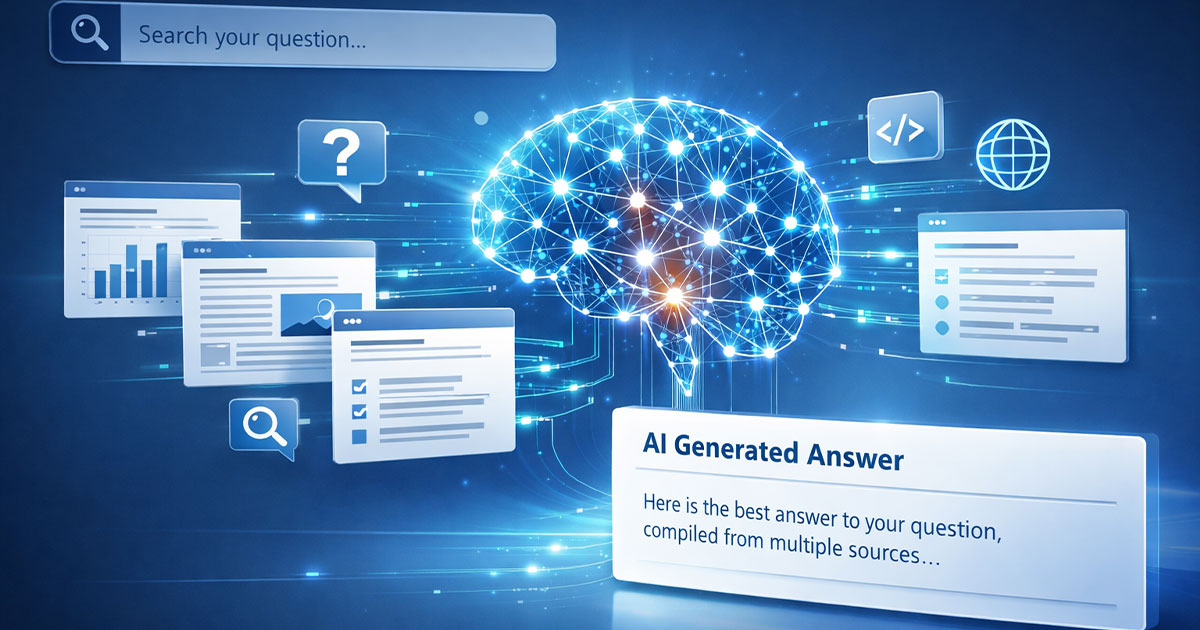
Search engines have evolved far beyond simple keyword matching. Today’s search platforms increasingly rely on artificial intelligence to interpret queries, understand context, and deliver direct answers to users.
Instead of returning a list of links, modern search engines often summarize information and present it immediately within the search results.
This transformation has created a new search environment where businesses must optimize their content not only for traditional search rankings but also for AI-powered search systems.
Understanding how AI search engines deliver answers can help businesses improve their visibility in modern search experiences.
To understand how these strategies connect to modern search optimization, explore our complete guide to Local SEO and Answer Engine Optimization.
What Is AI Search?
AI search refers to search systems that use artificial intelligence to interpret user queries and deliver more accurate results.
These systems rely on technologies such as:
- natural language processing
- machine learning
- semantic search
- contextual analysis
Rather than matching keywords alone, AI search systems attempt to understand the meaning behind a query.
This allows search engines to generate summaries and direct answers from multiple sources.
These results may appear as:
- AI-generated search summaries
- featured snippets
- voice assistant responses
- conversational search results
AI search has become a key driver behind the growth of Answer Engine Optimization.
How AI Search Engines Interpret Queries
AI search systems analyze several elements when interpreting a search query.
These include:
- the intent behind the question
- the context of the search
- previous user behavior
- semantic relationships between words
For example, if a user asks:
“What is answer engine optimization?”
AI systems analyze the meaning of the question rather than simply matching keywords.
They then locate webpages that clearly explain the concept and extract the most relevant information.
Structured content helps search engines identify these answers more effectively.
The Role of Content Structure in AI Search
Content structure plays an important role in how AI search systems interpret webpages.
Search engines prefer pages that organize information clearly and logically.
Effective content formatting often includes:
- descriptive headings
- short explanatory paragraphs
- bullet lists summarizing key information
- FAQ sections addressing common questions
These formatting techniques help search engines extract useful answers.
To understand how structured content improves search visibility, read The Role of Content Structure in SEO and AEO.
AI Search and Featured Snippets
Featured snippets are one of the earliest examples of answer-driven search results.
These highlighted answer boxes appear at the top of search results and provide direct responses to user questions.
AI search engines often use similar extraction methods when generating search summaries.
Businesses that structure their content clearly improve their chances of appearing in these results.
To learn more about how these answer boxes work, review How Featured Snippets Work in Google Search.
Voice Search and Conversational Queries
Voice search is closely connected to AI search technology.
When users speak to digital assistants, the system must interpret conversational language and provide an immediate answer.
Because voice queries often sound like natural questions, search engines rely heavily on structured content to provide responses.
Businesses that optimize their content for conversational queries improve their chances of appearing in voice search results.
To learn more about this strategy, read Voice Search Optimization for Businesses.
Why Businesses Must Adapt to AI Search
AI-powered search experiences are changing how users discover information online.
Instead of browsing multiple websites, users often receive summarized answers directly within search results.
Businesses that adapt their content strategy can benefit from increased visibility.
Key strategies include:
- structuring content around common questions
- organizing information clearly
- publishing high-quality educational content
- building authority through related topic clusters
Companies that develop expertise around specific topics are more likely to be recognized by search engines as authoritative sources.
Frequently Asked Questions
What is AI search?
AI search uses artificial intelligence to interpret search queries and deliver more accurate and context-aware answers.
How do AI search engines find answers?
AI search engines analyze website content using natural language processing and extract information that clearly explains a topic.
Does AI search replace traditional SEO?
No. AI search builds on traditional SEO by focusing on structured content and answer-based information.
Why is AI search important for businesses?
AI search affects how information appears in search results, including featured snippets, voice search responses, and AI-generated summaries.
Conclusion
Artificial intelligence is transforming how search engines interpret information and deliver answers to users. As AI-driven search experiences continue to evolve, businesses must adapt their content strategies to remain visible online.
By combining traditional SEO practices with Answer Engine Optimization and structured content formatting, businesses can improve their chances of appearing in AI-generated search results and conversational search experiences.
To understand how these strategies work together, explore our complete guide to Local SEO and Answer Engine Optimization.
About PG38 Creative
Marketing Strategies Built for Growth
PG38 Creative helps businesses grow through strategic marketing, creative content, and advanced search visibility. Our team specializes in website design, video marketing, paid advertising, and modern search strategies like SEO and Answer Engine Optimization (AEO).
We help companies build systems that attract customers, generate leads, and create long-term brand visibility.