Quick Answer
AI is not replacing construction jobs. It is improving how construction businesses operate, especially in estimating, communication, scheduling, and lead management. The contractors who address these areas now are already gaining an advantage in their market.

This Shift Is Already Happening in Construction
Most contractors think they’re losing jobs because of price, competition, or market conditions.
In reality, many are losing them before they ever have a chance to send a quote.
Missed calls, slow responses, delayed estimates, and inconsistent follow-up are costing more work than most businesses realize. As expectations around speed and communication continue to increase, those gaps are becoming more expensive.
AI isn’t replacing construction jobs, but it is changing how contractors manage leads, estimates, and communication behind the scenes.
The businesses that improve these areas are starting to respond faster, stay more organized, and win more work. The ones that don’t are often left wondering why jobs are slipping through the cracks.
This guide breaks down what’s actually changing, where contractors are losing opportunities right now, and what’s worth paying attention to moving forward.
What AI Is Actually Changing in Construction
To understand where AI fits, you have to separate the work from the workflow.
Construction will always depend on skilled labor and execution. What AI is influencing is everything that supports that work.
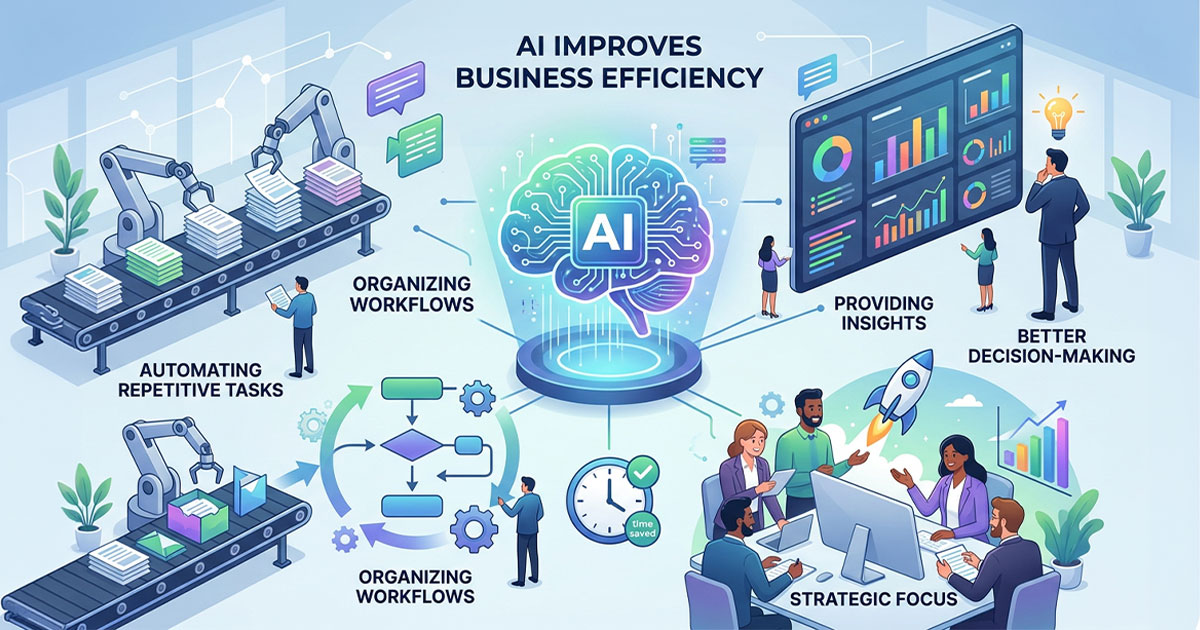
In practical terms, this includes:
- Estimating: Using past job data and structured inputs to reduce the time it takes to create accurate proposals
- Scheduling: Organizing crews, timelines, and job phases with better visibility and fewer conflicts
- Communication: Ensuring that leads, clients, and team members receive consistent and timely updates
- Lead Management: Responding to inquiries immediately instead of hours or days later
- Documentation: Keeping job notes, updates, and issues organized in one place instead of scattered across texts and calls
None of these changes replace your expertise. They make your business easier to work with and more consistent in how it operates.
For a broader breakdown of how AI improves operations across industries, see:
How AI Can Improve Business Efficiency and Productivity
The Core Concern: Is AI Going to Replace Construction Jobs?
This is the question most contractors are actually asking, even if they do not say it directly.
The answer is no, but the reason matters.
Construction is not a purely digital environment. It requires physical execution, situational awareness, and real-time decision making. These are not areas where AI performs well.
What AI does affect are the repetitive and time-sensitive tasks that surround the work.
That distinction is important.
AI is not replacing:
- The ability to build
- The ability to solve problems on-site
- The experience required to complete a job correctly
AI is replacing:
- Delays in communication
- Manual organization of information
- Inconsistent follow-up with leads
The concern should not be whether AI replaces your job. The concern should be whether your business is keeping up with how others are improving.
Where Roles in Construction Are Beginning to Shift
Not every role is affected equally. The impact tends to show up first in areas where time is spent managing information.
Office Administration
Administrative tasks are becoming more structured and automated. Instead of manually handling every call, message, and reminder, systems can assist with initial responses and organization.
Estimating (Support, Not Replacement)
Estimators still rely on experience, but AI can assist in organizing historical data and generating starting points. This reduces the time required to produce a professional estimate while keeping the final decision in human hands.
Project Coordination
Coordinators benefit from improved visibility. When job updates, notes, and timelines are centralized, less time is spent chasing information and more time is spent managing progress.
Lead Follow-Up and Sales
This is one of the most immediate areas of impact. Businesses that respond quickly and consistently are more likely to secure the job, regardless of how they generated the lead.
If you are evaluating where automation fits in your own business, start here:
How to Identify Tasks in Your Business That Can Be Automated with AI
What Will Not Change in Construction
While certain processes are evolving, the core of construction remains unchanged.
The following areas will continue to rely on people:
- Skilled trades such as carpentry, electrical, plumbing, and HVAC
- Jobsite leadership and crew management
- Real-time problem solving when conditions change
- Client relationships built on trust and reliability
The closer a role is to physical work and human interaction, the less it is affected by automation.
This is why construction is not an industry that will be replaced by AI. It is an industry that will be refined by it.
Where Contractors Are Losing Jobs Right Now
Most construction businesses are not losing jobs because of AI. They are losing jobs because of operational gaps that already exist.
Common issues include:
- Missed calls that never turn into conversations
- Delayed estimates that reduce interest from potential clients
- Inconsistent follow-up that allows leads to move on
- Disorganized scheduling that creates friction during projects
- Communication breakdowns between office and field
These are not new problems. What is changing is how quickly they can be fixed.
The contractors who address these areas first will not necessarily be better builders. They will be better operators.
How AI Creates a Practical Advantage for Contractors
AI is most valuable when it is applied to specific problems, not when it is treated as a broad solution.
In construction businesses, that typically means:
- Ensuring every lead receives an immediate response
- Reducing the time required to produce estimates
- Keeping communication organized and accessible
- Improving visibility across active jobs
- Supporting customer communication without adding additional staff
These improvements compound over time. Faster response leads to more conversations. Better organization leads to fewer issues. Consistent communication leads to stronger client relationships.
A Practical Starting Point for Contractors
Most businesses do not need a full system overhaul. They need targeted improvements in the areas that are already costing them time or opportunities.
A practical starting point includes:
- Setting up an immediate response system for missed calls and inquiries
- Improving the speed and consistency of estimates
- Creating a structured approach to lead follow-up
- Centralizing communication and job information
These are not complex changes, but they have a measurable impact on how your business performs.
The Reality for Contractors in Michigan
In markets like Jackson and throughout Michigan, many construction businesses are still operating without structured systems for managing communication, scheduling, and follow-up.
This creates an opportunity.
Right now:
- Many businesses are slow to respond
- Many rely on memory instead of process
- Many lose opportunities before they even provide a quote
The contractors who make small operational improvements will stand out quickly because the baseline is still relatively low. That advantage will not last indefinitely.
The Real Risk Is Not AI. It Is Inaction
AI is not the threat to construction businesses. Inaction is.
Over time, small inefficiencies become larger problems. Missed calls turn into lost jobs. Slow estimates turn into missed opportunities. Disorganization turns into unnecessary stress and reduced margins. The businesses that address these issues now will build a more stable and scalable operation.
For a broader understanding of how AI fits into long-term business strategy, see:
What Is AI Consulting and How Can It Help Your Business?
See Where Your Construction Business Can Improve
Most contractors already have a sense of where things are slowing down.
It might be delayed estimates, missed calls, or simply too many moving parts to keep track of consistently. The challenge usually isn’t identifying that something is off, it’s knowing what’s actually costing you jobs and what’s worth fixing first.
As expectations continue to shift toward faster response times and better communication, small gaps in your process can quickly turn into lost opportunities.
The good news is that most of these issues are not complicated to fix. But, they do require clarity and the right approach.
If you want to get a clearer picture of where your construction business may be losing jobs right now, you can start by answering a few quick questions below.
Frequently Asked Questions About AI in Construction
1. Is AI going to replace construction jobs?
No, AI is not replacing construction jobs. The industry depends heavily on skilled labor, physical execution, and real-time decision making areas where AI has very limited capability. What AI is actually doing is improving how construction businesses operate behind the scenes, particularly in communication, estimating, and organization.
The real shift is not job replacement, but operational efficiency. Contractors who improve these areas will gain an advantage over those who continue relying on slower, manual processes.
2. How are contractors already losing jobs without realizing it?
Most contractors are not losing jobs because of poor workmanship. They are losing jobs earlier in the process due to:
- Slow response times to calls and inquiries
- Delays in sending estimates
- Inconsistent or nonexistent follow-up
- Disorganized communication
In many cases, the first contractor to respond and stay engaged secures the job. This is where more efficient systems, often supported by AI, are already making a measurable difference.
3. What is the easiest way for a contractor to start using AI?
The most effective starting point is to focus on one area that is already costing you time or opportunities.
For most contractors, that includes:
- Setting up automatic responses for missed calls or website inquiries
- Improving the speed and consistency of estimates
- Creating a simple system for tracking and following up with leads
You do not need to overhaul your business. Small improvements in response time and organization can have an immediate impact.
4. Do small construction businesses actually need AI?
Small construction businesses often benefit the most from AI because they typically have fewer resources and less time to manage administrative tasks.
AI is not about adding complexity. It is about reducing the time spent on repetitive tasks so you can focus on running jobs and growing the business.
In many cases, a few targeted improvements can help a smaller operation compete more effectively with larger companies.
5. How do I know if AI is worth implementing in my construction business?
AI is worth considering if you are experiencing any of the following:
- Missed or delayed responses to leads
- Difficulty keeping up with estimates
- Disorganized scheduling or communication
- Inconsistent follow-up with potential clients
If these issues are present, AI can help streamline those areas. The key is identifying what is actually slowing your business down and applying the right solution, not adding unnecessary tools.
See Where Your Construction Business Is Losing Jobs
Most contractors aren’t losing jobs because of poor work. They’re losing them before they ever send a quote. Answer a few quick questions and we’ll identify where your process may be costing you jobs and time.
About PG38 Creative
Marketing Strategies Built for Growth
PG38 Creative helps businesses grow through strategic marketing, creative content, and advanced search visibility. Our team specializes in website design, video marketing, paid advertising, and modern search strategies like SEO and Answer Engine Optimization (AEO).
We help companies build systems that attract customers, generate leads, and create long-term brand visibility.