Quick Answer
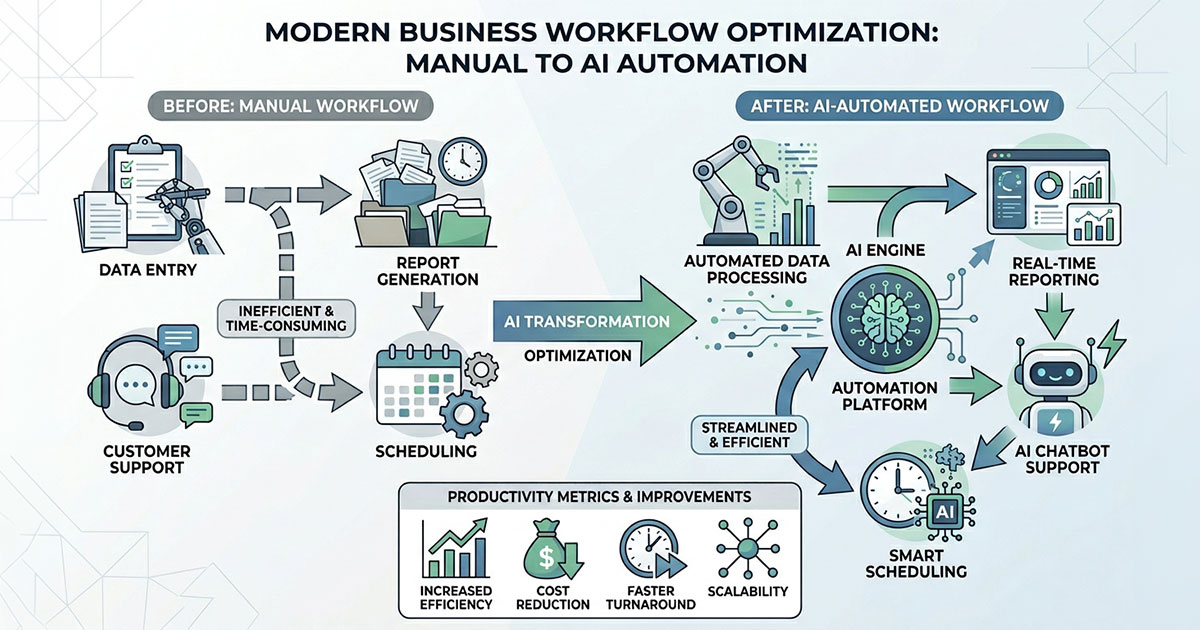
To build an AI strategy, businesses should identify inefficiencies, choose the right tools, implement solutions gradually, and measure results. A structured approach ensures AI improves operations without adding unnecessary complexity.
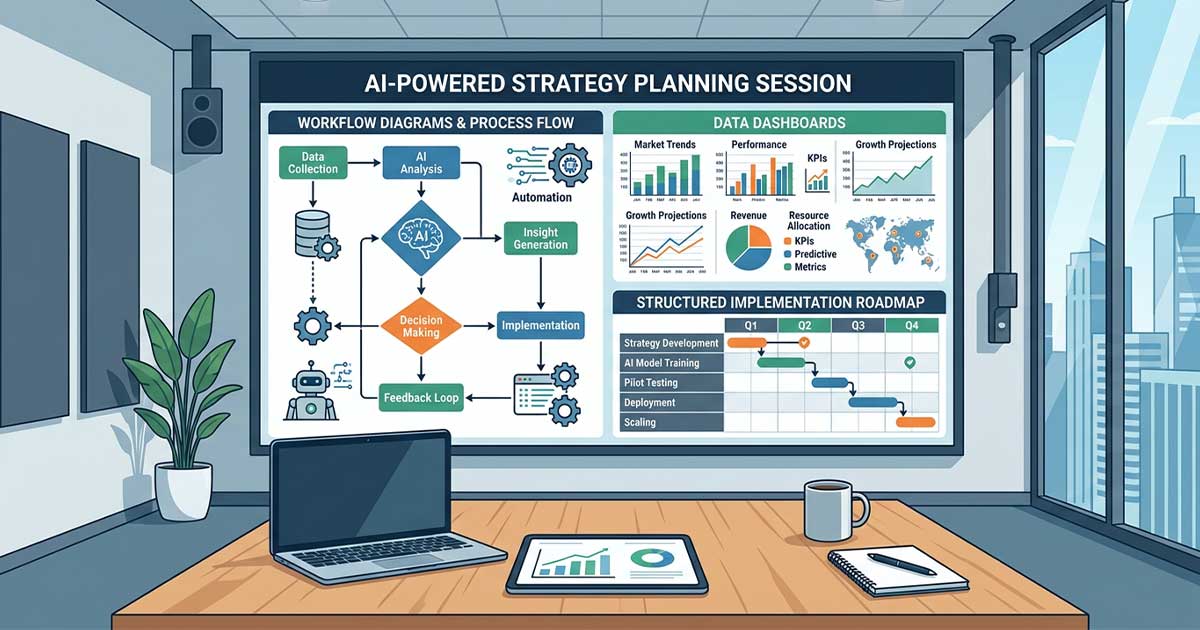
Many businesses are interested in using artificial intelligence, but few have a clear plan for how to implement it.
Without a strategy, AI often becomes a collection of disconnected tools that do not produce meaningful results. An effective AI strategy focuses on improving how a business operates. It connects tools, processes, and goals into a system that supports efficiency and growth.
The goal is not to adopt technology for the sake of it, but to create measurable improvements in performance.
To understand how AI fits into a broader system, explore our complete guide to AI consulting and business optimization for modern companies.
What Is an AI Strategy?
An AI strategy is a structured plan for how a business will use artificial intelligence to improve operations. It defines:
- where AI will be applied
- how it will be implemented
- what results are expected
A clear strategy ensures that AI is used intentionally rather than randomly.
Why Businesses Need an AI Strategy
Without a strategy, businesses often:
- implement tools without clear goals
- create disconnected systems
- fail to measure results
An AI strategy provides direction and ensures that efforts are aligned with business objectives.
The Foundation of a Strong AI Strategy
A strong AI strategy is built on understanding the business itself. This includes:
- current workflows
- existing inefficiencies
- business goals
- available resources
This foundation ensures that AI supports real needs.
Step-by-Step Framework for Building an AI Strategy
Step 1: Identify Inefficiencies
The first step is understanding where improvements can be made. Look for:
- repetitive tasks
- slow workflows
- communication gaps
- manual processes
To learn how to identify these opportunities, read How to Identify Tasks in Your Business That Can Be Automated with AI.
Step 2: Define Clear Objectives
AI should solve specific problems. Define goals such as:
- reducing time spent on tasks
- improving workflow efficiency
- increasing productivity
Clear objectives guide implementation.
Step 3: Prioritize Opportunities
Not all opportunities should be addressed at once. Focus on areas that:
- provide immediate value
- are easy to implement
- have measurable impact
This creates early success.
Step 4: Select the Right Tools
Choose tools that align with your goals. Avoid selecting tools based on trends or popularity. Instead, focus on:
- functionality
- ease of use
- integration with existing systems
Step 5: Implement Gradually
AI should be introduced in stages. Start with:
- one or two processes
- small improvements
- controlled testing
This reduces risk and allows for adjustments.
Step 6: Measure Results
Tracking performance is essential. Measure:
- time saved
- efficiency improvements
- productivity gains
To understand how to measure impact, read How to Measure ROI from AI in Your Business.
Step 7: Optimize and Scale
Once initial improvements are successful, expand the strategy. This includes:
- refining systems
- adding new automation
- improving workflows
Scaling should be based on proven results.
How AI Strategy Connects to Business Functions
AI strategy should not exist in isolation. It should connect across:
- marketing
- sales
- operations
To understand how AI impacts these areas, read How AI Is Changing Marketing, Sales, and Operations.
AI Strategy and Website Performance
AI can also be applied to website optimization. Businesses can use AI to:
- improve user experience
- optimize content
- increase conversions
To understand how websites drive results, read What Makes a High-Converting Website.
Common AI Strategy Mistakes
Businesses often make mistakes when building a strategy. These include:
- trying to implement too much at once
- lacking clear goals
- ignoring measurement
- overcomplicating systems
To understand how to avoid these issues, read Common AI Mistakes Businesses Make (And How to Avoid Them).
The Role of Human Decision-Making
AI should support decision-making, not replace it. Businesses should maintain:
- oversight
- strategic direction
- quality control
To understand this balance, read AI vs Human Work: What Should Businesses Automate?.
Services That Support AI Strategy
At PG38 Creative, we help businesses build structured AI strategies that improve efficiency and support growth. Our approach focuses on practical implementation and measurable results.
Explore our AI Consulting & Business Optimization services to learn how we help businesses build effective AI systems.
Frequently Asked Questions
What is an AI strategy?
An AI strategy is a plan for how a business will use artificial intelligence to improve operations and performance.
Why is an AI strategy important?
It ensures that AI is implemented effectively and aligned with business goals.
How do you start building an AI strategy?
Start by identifying inefficiencies, defining goals, and implementing small improvements.
Can small businesses build an AI strategy?
Yes. AI strategies can be scaled to fit businesses of all sizes.
How do you measure AI success?
Success is measured through efficiency improvements, productivity gains, and performance results.
Conclusion
Building an AI strategy allows businesses to move from experimentation to structured improvement. By focusing on clear goals, practical implementation, and measurable results, companies can use AI to improve efficiency and support long-term growth.
The key is to start small, stay focused, and build systems over time.
To understand how AI fits into a complete strategy, revisit our complete guide to AI consulting and business optimization for modern companies.
About PG38 Creative
Marketing Strategies Built for Growth
PG38 Creative helps businesses grow through strategic marketing, creative content, and advanced search visibility. Our team specializes in website design, video marketing, paid advertising, and modern search strategies like SEO and Answer Engine Optimization (AEO).
We help companies build systems that attract customers, generate leads, and create long-term brand visibility.