Quick Answer
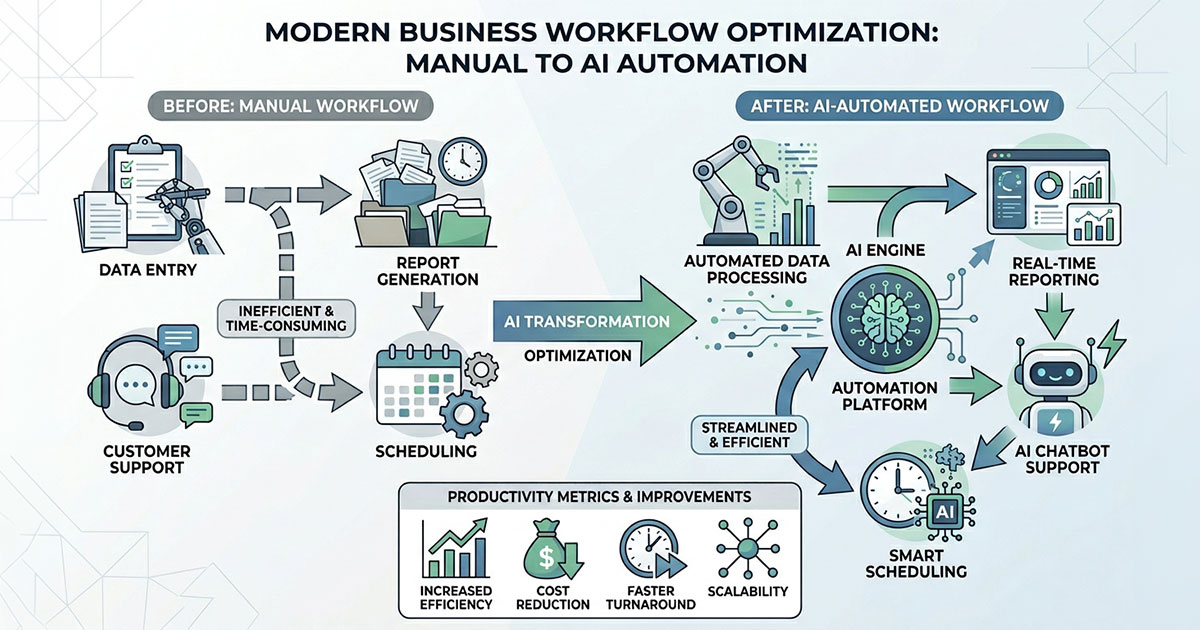
To measure ROI from AI, businesses should track key metrics such as time saved, cost reduction, improved productivity, and increased revenue. Comparing these results to the cost of implementation helps determine the overall value of AI.
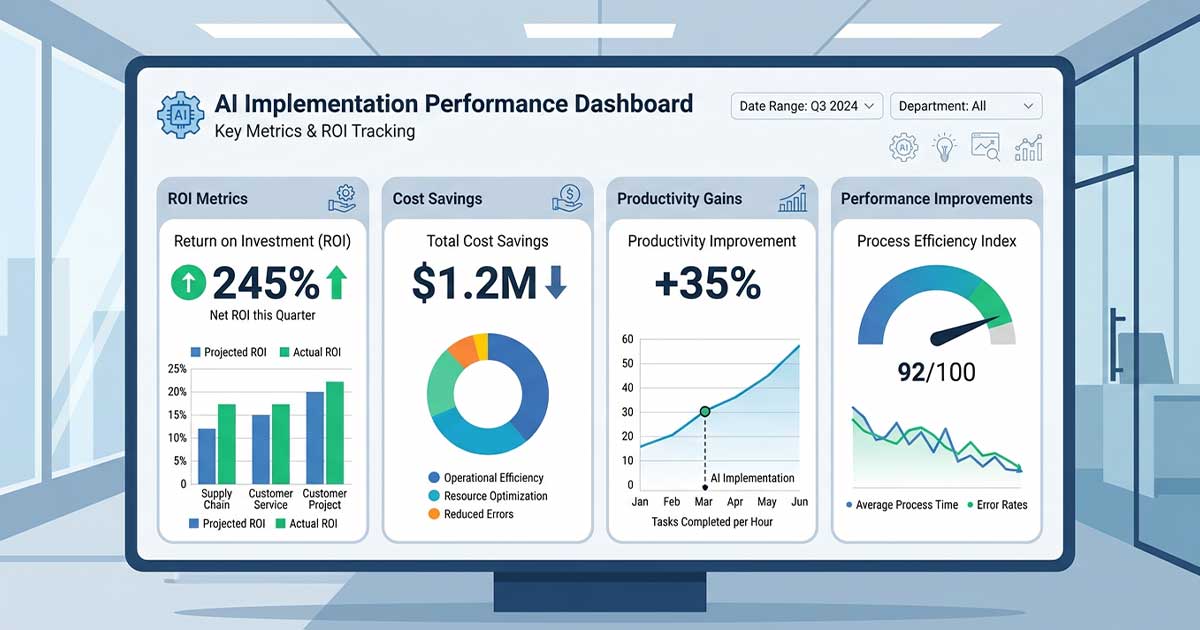
Many businesses are interested in artificial intelligence, but the real question is whether it produces measurable results.
Implementing AI without tracking performance can lead to uncertainty. Measuring return on investment provides clarity and helps businesses understand the true impact of their efforts.
AI should not be viewed as an expense alone. It should be evaluated based on the value it creates.
To understand how AI fits into a broader system, explore our complete guide to AI consulting and business optimization for modern companies.
What Is ROI in the Context of AI?
Return on investment (ROI) measures the value gained from an investment compared to its cost. In the context of AI, ROI focuses on improvements such as:
- efficiency gains
- cost savings
- productivity increases
- revenue growth
The goal is to determine whether AI is improving overall business performance.
Why Measuring AI ROI Matters
Without measurement, it is difficult to know if AI is working. Tracking ROI allows businesses to:
- justify investments
- identify successful strategies
- improve implementation
- make better decisions
Measurement ensures that AI is delivering real value.
Key Metrics to Measure AI ROI
Time Saved
One of the most immediate benefits of AI is reducing the time spent on tasks. Examples include:
- automating data entry
- streamlining workflows
- reducing manual processes
Time saved translates directly into efficiency.
Cost Reduction
AI can reduce costs by minimizing the need for manual work and improving operational efficiency. This includes:
- lowering labor costs for repetitive tasks
- reducing errors
- improving resource allocation
Productivity Improvements
AI allows teams to accomplish more in less time. This leads to:
- increased output
- faster task completion
- improved workflow efficiency
To understand how AI improves efficiency, read How AI Can Improve Business Efficiency and Productivity.
Revenue Growth
AI can contribute to revenue by improving:
- lead generation
- conversion rates
- customer experience
To understand how websites contribute to growth, read The Role of AI in Website Optimization and Lead Generation.
Accuracy and Error Reduction
AI reduces human error in repetitive processes. This leads to:
- more reliable data
- improved consistency
- better decision-making
How to Calculate AI ROI
A simple way to evaluate ROI is to compare results before and after implementation. This includes:
- measuring baseline performance
- tracking improvements
- comparing against costs
ROI can be expressed as:
- value gained relative to cost
- efficiency improvements over time
The key is consistency in measurement.
Tracking AI Performance Over Time
AI results may not be immediate. Businesses should track performance over time to understand long-term impact. This includes:
- ongoing data collection
- regular performance reviews
- continuous optimization
Tools for Measuring AI ROI
Businesses can use various tools to track performance. These may include:
- analytics platforms
- reporting systems
- workflow tracking tools
These tools provide insights into how AI is impacting operations.
Common Challenges in Measuring ROI
Measuring AI ROI can be difficult without a clear structure. Common challenges include:
- not defining clear goals
- tracking too many metrics
- failing to establish a baseline
- not measuring consistently
A focused approach improves accuracy.
How to Improve AI ROI
Businesses can improve ROI by:
- focusing on high-impact areas
- optimizing workflows
- measuring results consistently
- refining systems over time
To understand how to build a structured approach, read How to Build an AI Strategy for Your Business.
AI ROI Across Marketing, Sales, and Operations
AI impacts multiple areas of a business. This includes:
- marketing performance
- sales efficiency
- operational workflows
To understand how these areas connect, read How AI Is Changing Marketing, Sales, and Operations.
Services That Support AI ROI
At PG38 Creative, we help businesses implement AI systems that produce measurable results. Our approach focuses on tracking performance, improving efficiency, and maximizing return on investment.
Explore our AI Consulting & Business Optimization services to learn how we help businesses improve performance.
Frequently Asked Questions
How do you measure ROI from AI?
ROI is measured by tracking improvements in efficiency, cost savings, productivity, and revenue.
What metrics matter most for AI ROI?
Key metrics include time saved, cost reduction, productivity, and revenue growth.
How long does it take to see ROI from AI?
Some improvements are immediate, while others develop over time.
Can small businesses measure AI ROI?
Yes. Even small improvements can be tracked and measured effectively.
What is the biggest mistake in measuring AI ROI?
The biggest mistake is not tracking performance or failing to define clear goals.
Conclusion
Measuring ROI from AI provides the clarity businesses need to understand the value of their investment. By tracking key metrics and focusing on measurable improvements, companies can ensure that AI is contributing to growth and efficiency.
The goal is not just to implement AI, but to create systems that produce consistent and measurable results.
To see how AI fits into a complete strategy, revisit our complete guide to AI consulting and business optimization for modern companies.
About PG38 Creative
Marketing Strategies Built for Growth
PG38 Creative helps businesses grow through strategic marketing, creative content, and advanced search visibility. Our team specializes in website design, video marketing, paid advertising, and modern search strategies like SEO and Answer Engine Optimization (AEO).
We help companies build systems that attract customers, generate leads, and create long-term brand visibility.