Quick Answer
A well-structured website organizes content in a clear hierarchy, making it easy for both users and search engines to navigate. By using logical page organization, internal linking, and structured content, businesses can improve SEO rankings, appear in AI search results, and increase conversions.
A website is more than just a collection of pages. How those pages are organized plays a major role in both search visibility and user experience. Website structure determines how easily users can navigate content and how effectively search engines can interpret it.
A poorly structured website can limit visibility and reduce conversions. A well-structured website supports both SEO and Answer Engine Optimization while guiding users toward action.
To understand how structure fits into a broader strategy, explore our complete guide to website design that converts visitors into customers.
What Is Website Structure?
Website structure refers to how pages are organized and connected within a site. This includes:
- page hierarchy
- navigation flow
- internal linking
- content organization
A strong structure ensures that both users and search engines can easily understand how content is related.
Why Website Structure Matters for SEO
Search engines rely on structure to interpret a website. A clear hierarchy helps search engines:
- understand page relationships
- identify important content
- index pages more effectively
Websites with strong structure are more likely to rank higher in search results. To understand how content contributes to this, read The Role of Content Structure in SEO and AEO.
Why Website Structure Matters for AEO
Answer Engine Optimization depends on how easily search engines can extract information. Structured websites make it easier for AI systems to:
- locate relevant content
- understand context
- generate direct answers
This improves the chances of appearing in:
- featured snippets
- AI-generated summaries
- voice search results
To understand how AI search works, read How AI Search Engines Deliver Answers.
The Core Components of a Well-Structured Website
Clear Page Hierarchy
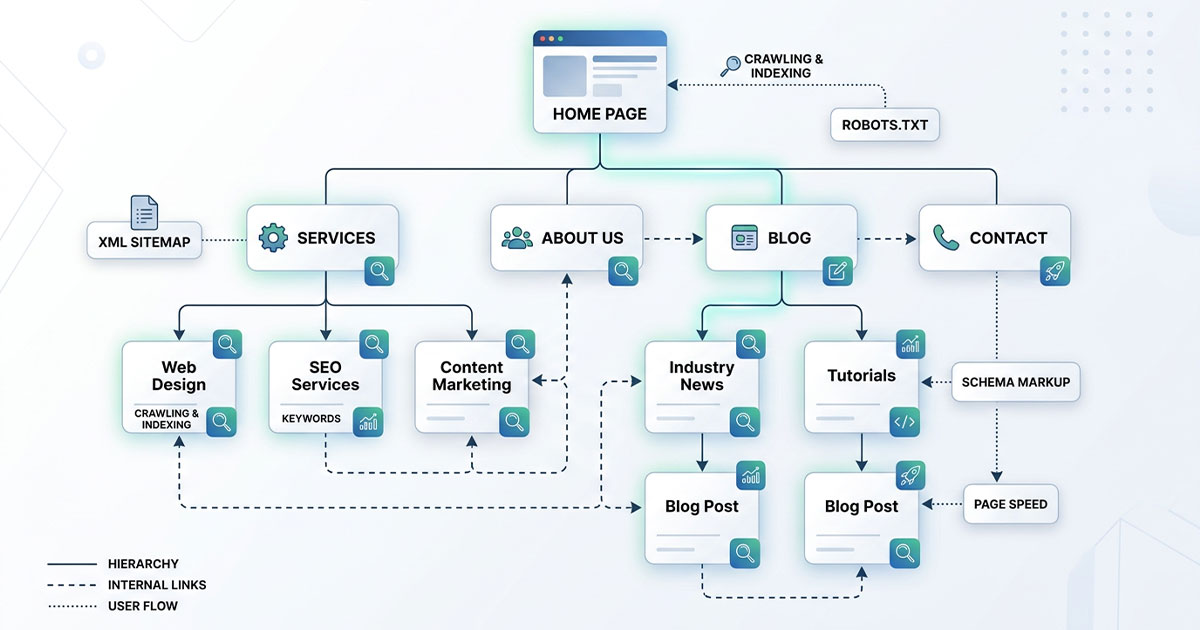
A website should follow a logical hierarchy. This typically includes:
- homepage
- service pages
- supporting content (blog articles)
Each level should connect naturally to the next.
Organized Navigation
Navigation should reflect the structure of the website. Users should be able to move from general pages to specific content easily.
To understand how navigation impacts performance, read Website Navigation Best Practices for Conversions.
Internal Linking
Internal links connect related pages. They help:
- guide users
- distribute authority across the site
- improve search engine understanding
Every article should link to:
- its cornerstone
- related cluster articles
- relevant service pages
Structured Content
Content should be easy to scan and understand. This includes:
- clear headings
- short paragraphs
- organized sections
Structured content improves both readability and search visibility.
How Structure Impacts Conversions
Website structure is not just about SEO. It also affects how users move through the site.
A strong structure:
- reduces confusion
- improves navigation
- guides users toward action
To understand what drives conversions, read What Makes a High-Converting Website.
Topic Clusters and Content Organization
Topic clusters are a key part of modern website structure. This approach includes:
- one cornerstone page
- multiple supporting articles
All pages are connected through internal linking. This helps search engines recognize authority on a topic.
Common Website Structure Mistakes
Many businesses struggle with structure due to common issues.
These include:
• disorganized page hierarchy
• lack of internal linking
• unclear navigation
• inconsistent content structure
Fixing these issues can improve both visibility and performance.
How to Improve Website Structure
Businesses can improve structure by focusing on clarity and organization. Key strategies include:
- organizing pages into clear categories
- linking related content
- simplifying navigation
- structuring content for readability
Consistent improvements lead to better results over time.
Structure and Website Performance
Structure also impacts performance.
Well-organized websites are easier to load, navigate, and optimize.
To understand how performance affects results, read Website Speed and Its Impact on SEO and Conversions.
Services That Improve Website Structure
At PG38 Creative, we build websites with structured systems designed for both visibility and conversions. Our approach focuses on connecting content, improving navigation, and guiding users toward action.
Explore our Website Design services to learn how we help businesses build high-performing websites.
Frequently Asked Questions
What is website structure?
Website structure refers to how pages are organized and connected within a site.
Why is website structure important for SEO?
Structure helps search engines understand content and improves indexing and rankings.
How does structure impact AEO?
A clear structure makes it easier for AI systems to extract information and generate answers.
What are topic clusters?
Topic clusters are groups of related content connected to a central cornerstone page.
How can I improve my website structure?
You can improve structure by organizing pages clearly, using internal links, and simplifying navigation.
Conclusion
Website structure is a foundational element of both SEO and AEO. A well-organized site helps search engines understand content while guiding users toward meaningful actions.
By focusing on hierarchy, internal linking, and structured content, businesses can improve visibility, engagement, and conversions.
To see how structure fits into a complete system, revisit our complete guide to website design that converts visitors into customers.
About PG38 Creative
Marketing Strategies Built for Growth
PG38 Creative helps businesses grow through strategic marketing, creative content, and advanced search visibility. Our team specializes in website design, video marketing, paid advertising, and modern search strategies like SEO and Answer Engine Optimization (AEO).
We help companies build systems that attract customers, generate leads, and create long-term brand visibility.