Quick Answer
To identify tasks that can be automated with AI, businesses should look for repetitive processes, manual data handling, and tasks that follow consistent rules. These are ideal opportunities for automation that can improve efficiency and reduce workload.
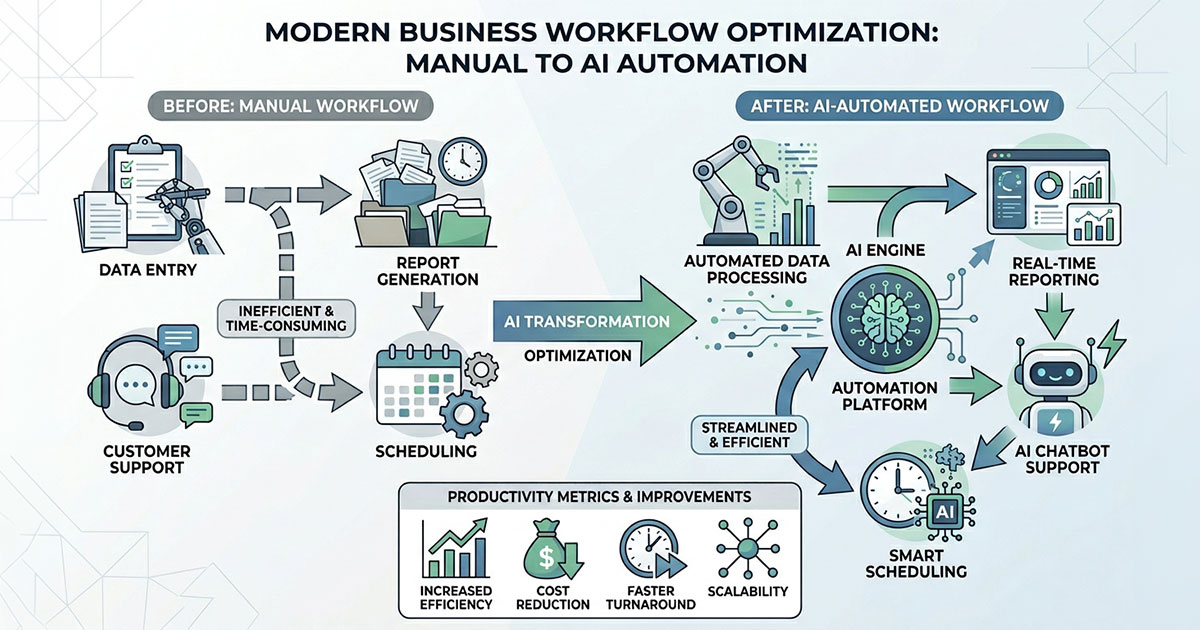
Most businesses already have opportunities to improve efficiency. The challenge is not whether automation is possible, but knowing where to apply it.
Many daily tasks are repetitive, time-consuming, and structured in a way that makes them ideal for automation. Identifying these tasks is the first step toward improving productivity.
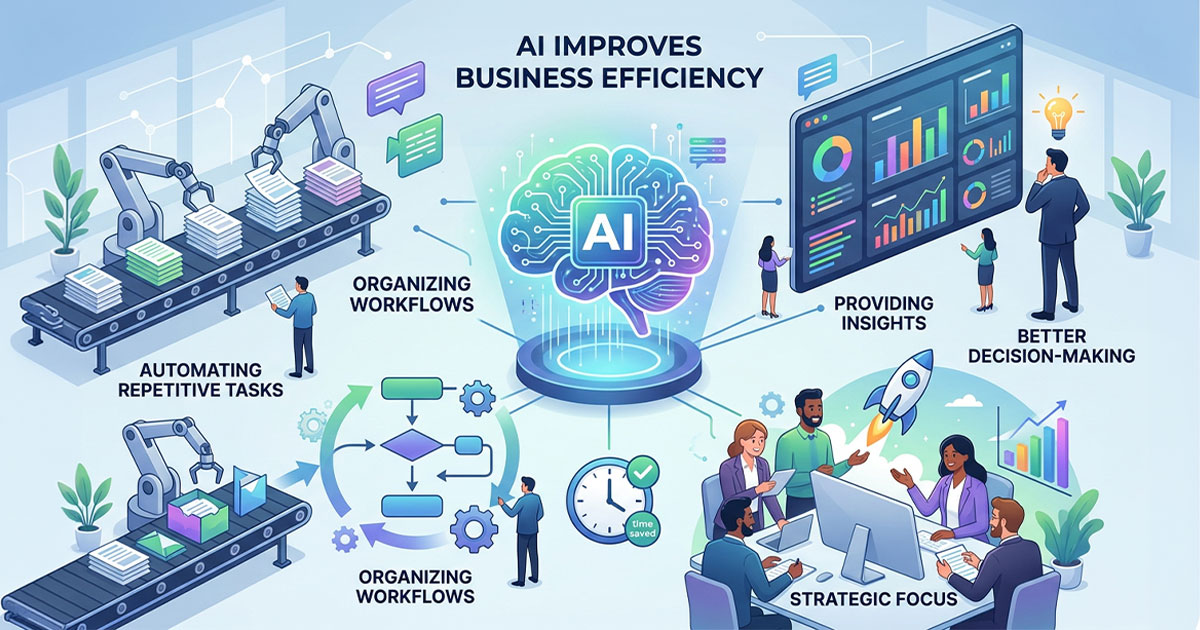
Artificial intelligence can support this process by reducing manual work and helping teams focus on more valuable activities.
To understand how automation fits into a broader system, explore our complete guide to AI consulting and business optimization for modern companies.
What Makes a Task a Good Candidate for Automation?
Not every task should be automated. The best candidates for AI automation share specific characteristics.
These tasks are typically:
- repetitive
- time-consuming
- rule-based
- predictable
When a task follows a consistent process, it becomes easier to automate.
Step 1: Identify Repetitive Tasks
Repetitive tasks are the easiest place to start. These are tasks that are performed frequently and follow the same steps each time.
Examples include:
- entering data
- responding to common emails
- scheduling appointments
- organizing files
Automating these tasks can save time and reduce errors.
Step 2: Look for Manual Processes
Manual processes often slow down operations. These tasks require human input for actions that could be handled by a system. Common examples include:
- transferring information between systems
- updating spreadsheets
- managing customer records
Reducing manual processes improves efficiency.
Step 3: Evaluate Time-Consuming Activities
Tasks that consume a large amount of time are strong candidates for automation. These may include:
- reporting
- data analysis
- content organization
Automating time-intensive work allows teams to focus on strategic activities.
Step 4: Identify Bottlenecks in Workflows
Bottlenecks occur when one part of a process slows everything down.
These are often caused by:
• manual approvals
• delayed communication
• inefficient systems
AI can help streamline these areas and improve overall workflow.
Step 5: Analyze Customer Interactions
Customer-facing tasks often involve repeated communication. AI can assist with:
- answering common questions
- managing inquiries
- organizing customer data
This improves response time and consistency.
Step 6: Focus on Data Handling Tasks
Tasks that involve processing data are ideal for automation. These include:
- data entry
- sorting information
- generating reports
AI tools can handle these processes quickly and accurately.
Where Businesses Typically Find Automation Opportunities
Automation opportunities exist across multiple areas.
Marketing
AI can help automate:
- content scheduling
- audience targeting
- campaign optimization
To understand how AI impacts marketing systems, read How AI Is Changing Marketing, Sales, and Operations.
Sales
Sales processes often include repetitive steps such as:
- lead organization
- follow-up communication
- pipeline tracking
Automation improves efficiency and consistency.
Operations
Operational workflows often contain inefficiencies.
AI can help:
- streamline processes
- reduce manual tasks
- improve coordination
Website and Lead Generation
AI can improve website performance by:
• personalizing user experiences
• optimizing content
• improving conversions
To understand how websites generate results, read What Makes a High-Converting Website.
How to Avoid Over-Automation
Automation should improve processes, not complicate them. Common mistakes include:
- automating too many tasks at once
- implementing tools without a clear purpose
- ignoring user experience
A focused approach leads to better results.
How to Start Automating Tasks
Businesses should begin with small improvements. A practical approach includes:
- identifying one or two tasks
- testing automation tools
- measuring results
- expanding gradually
This reduces risk and builds confidence.
Measuring the Impact of Automation
Automation should lead to measurable improvements. Key indicators include:
- time saved
- reduced errors
- improved workflow speed
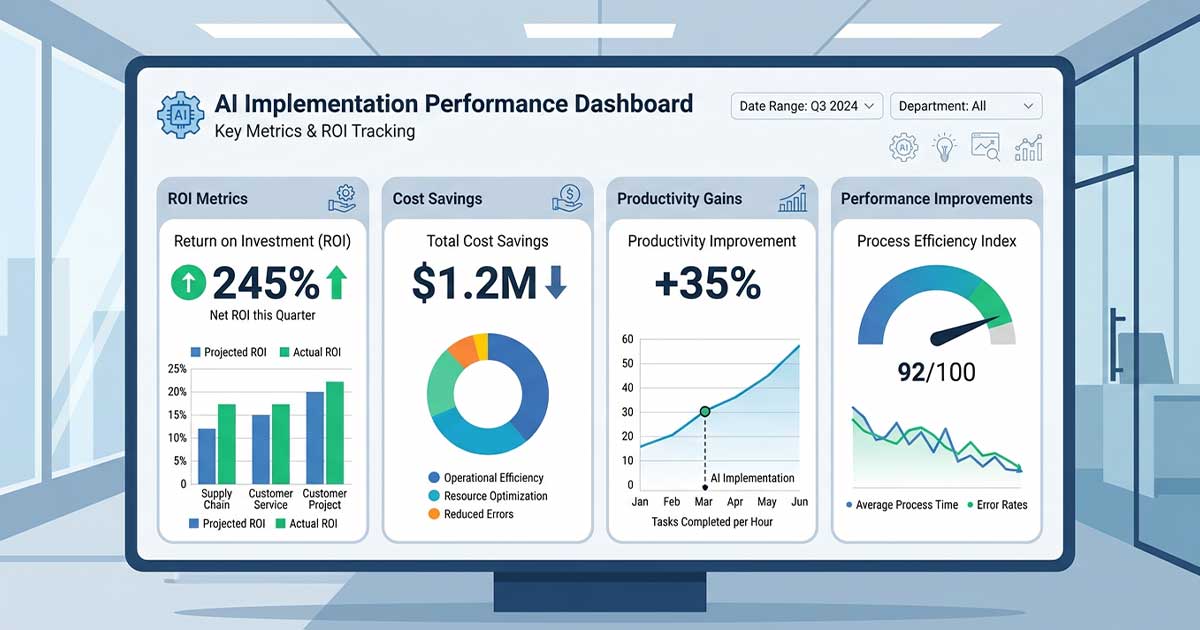
- increased productivity
To understand how to measure results, read How to Measure ROI from AI in Your Business.
Services That Support AI Automation
At PG38 Creative, we help businesses identify where automation can improve efficiency and build systems that support long-term growth.
Our approach focuses on practical implementation and measurable outcomes.
Explore our AI Consulting & Business Optimization services to learn how we help businesses streamline operations.
Frequently Asked Questions
What tasks can be automated with AI?
Tasks that are repetitive, time-consuming, and rule-based are ideal for automation.
How do I know what to automate?
Start by identifying tasks that take time, follow consistent steps, and require manual effort.
Can small businesses use AI automation?
Yes. Many AI tools are accessible and effective for small and mid-sized businesses.
Is it possible to automate too much?
Yes. Over-automation can create complexity. It is important to focus on practical improvements.
How do you measure automation success?
Success is measured by time savings, improved efficiency, and reduced errors.
Conclusion
Identifying tasks for AI automation is one of the most practical ways to improve business efficiency. By focusing on repetitive, time-consuming processes, businesses can reduce manual work and improve productivity.
The key is to start small, focus on meaningful improvements, and build systems over time.
To understand how automation fits into a complete strategy, revisit our complete guide to AI consulting and business optimization for modern companies.
About PG38 Creative
Marketing Strategies Built for Growth
PG38 Creative helps businesses grow through strategic marketing, creative content, and advanced search visibility. Our team specializes in website design, video marketing, paid advertising, and modern search strategies like SEO and Answer Engine Optimization (AEO).
We help companies build systems that attract customers, generate leads, and create long-term brand visibility.